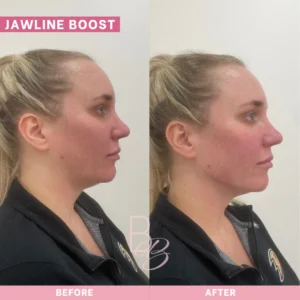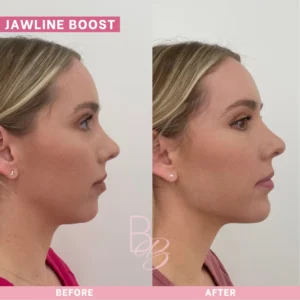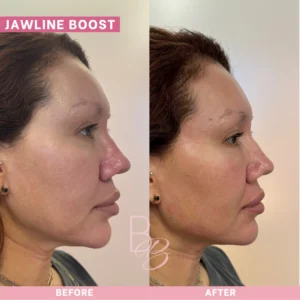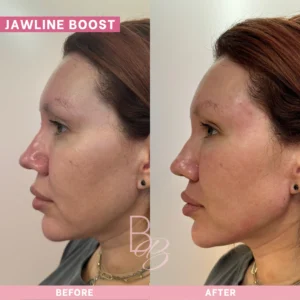

Few concerns are described as consistently as tired-looking eyes. Patients tell us that friends ask whether they slept poorly, that concealer settles into a shadow it cannot fully hide, or that photographs make them look more fatigued than they feel. In many cases, the cause is not a lack of rest but a change in structure: a hollow beneath the eye, a visible groove where the lower lid meets the cheek, or a loss of support in the upper cheek that lets shadows deepen. Because the under-eye area is delicate and highly visible, it also rewards a careful, conservative approach more than almost any other area of the face.
At Beauty Boost Med Spa in Newport Beach, under-eye treatment is one of the areas where we place the greatest emphasis on assessment. Our founder and master aesthetic injector, Anisa Mudawar, DNP, FNP-C, is an Allergan Medical Institute Trainer who teaches advanced injection techniques to other clinicians, and her approach to the eye area centers on safety, anatomy, and restraint. Patients searching for under-eye filler before and after results often expect a single solution, but the most natural outcomes usually come from understanding exactly why the area looks tired before deciding how to treat it.
What Under-Eye Filler Is and What the Eye Boost Does
Under-eye filler typically refers to a soft hyaluronic acid gel placed beneath the lower eyelid to soften hollowing and smooth the transition between the eye and the cheek. Hyaluronic acid is a substance that occurs naturally in the body, and it draws in water, which helps restore a smoother contour where volume has been lost. Importantly, hyaluronic acid filler can be dissolved with an enzyme called hyaluronidase if adjustment is ever needed, which is one reason it is the preferred material for this sensitive area.
At Beauty Boost, every treatment is a Boost, and our under-eye options are designed around the two main structural reasons the area looks hollow. Our Eye Boost uses filler to fill under-eye hollows and create a smoother transition between the tear trough and the cheek. Our Ultimate Eye Boost addresses the mid-face between the top of the cheeks and the under-eyes, replacing volume loss that can make the lower eyelid look longer and more shadowed. Both are part of our broader Filler Boosts menu, which is organized by area rather than by syringe count.
Why Area-Based Planning Matters Under the Eyes
Anisa plans treatment by area rather than by syringe, a decision rooted in patient safety and optimal correction. Under the eyes, this matters a great deal. Small volumes are usually all that is needed, and placing more product simply because it has been opened can lead to puffiness or a heavy appearance. Planning by area keeps the focus on the result, which in this region is often achieved with less than patients expect.
Why Eyes Look Tired: Understanding the Underlying Causes
The under-eye area changes with age at several levels at once. Fat pads beneath the eye can shift or diminish, the bony orbital rim can become more visible as the soft tissue over it thins, and the cheek can lose some of the support that once blended smoothly into the lower lid. The result may be a tear trough, the groove running from the inner corner of the eye toward the cheek, or a lid-cheek junction that looks more defined and shadowed than it once did. For some people, these features are present even in their twenties and are largely inherited.
Dark circles are a more complex issue, and not every dark circle is a hollow. A 2024 consensus framework by Liew and colleagues in Aesthetic Surgery Journal found that practitioners most often hear concerns about under-eye hollows, dark circles, and looking tired, and it recommended a stepwise assessment of lighting, cheek support, the orbital rim, the angle of the cheek relative to the eye, pigmentation, and skin quality. Notably, the authors concluded that careful assessment can identify patients whose dark circles may improve without injecting filler directly into the tear trough. This reflects our experience: some patients benefit most from mid-face support, while others need a treatment for pigmentation or thin skin rather than volume.
Sensitivity, Heritage, and Individual Features
The shape of the eye area varies widely across ethnic backgrounds and families, and those differences are part of what makes each face recognizable. We do not aim to erase natural features or impose a single standard. Some patients have naturally deeper-set eyes, while others carry more pigmentation beneath the lower lid that is entirely normal for their skin type. Our goal is to soften what bothers each patient while preserving the character of their face.
Our Signature Eye Boost Approach
At Beauty Boost, our team of expert injectors follows what we call our Signature Eye Boost approach, built on three principles: assess thoroughly, treat conservatively, and correct precisely. Every consultation begins with an evaluation of the eye area at rest and in motion, in varied lighting, and in relation to the cheek and overall facial proportion. We ask about previous filler, since many patients are unsure whether product from past treatments remains.
Ultrasound Imaging for Vascular Mapping
A distinctive part of our practice is the use of ultrasound imaging as a diagnostic and planning tool. High-frequency ultrasound allows our clinicians to visualize blood vessels, fat pads, tissue planes, and previously placed filler before treatment, and the tear trough is one of the higher-risk areas where this information is especially valuable. Research supports the importance of this anatomy: in a 2022 ultrasound study in Aesthetic Surgery Journal, Calomeni and colleagues found that the angular vein traveled within the orbicularis oculi muscle in the tear trough in every participant, and they recommended a deep injection approach in this region. At Beauty Boost, ultrasound is used for vascular mapping and filler localization before treatment and, when appropriate, to reassess during the session, rather than to guide injections in real time.
Choosing Between the Eye Boost and Ultimate Eye Boost
When the hollow sits directly beneath the eye and the cheek is well supported, an Eye Boost may be the most appropriate choice. When the cheek has lost volume and the lower lid appears to extend downward, an Ultimate Eye Boost, or a combination of mid-face support and careful tear trough treatment, may produce a more balanced and natural result. A 2022 systematic review by Rao and colleagues in Plastic and Reconstructive Surgery found no significant difference in aesthetic results, satisfaction, or adverse events between needle and cannula techniques for tear trough filler, which is why we select the technique based on each patient’s anatomy rather than a fixed rule.
Candidacy and When Filler May Not Be the Answer
Good candidates for under-eye filler generally have true hollowing, reasonably good skin quality, and minimal puffiness or fluid retention. Patients with prominent under-eye bags, significant skin laxity, or swelling that worsens in the morning may not be well suited to filler, since added volume can make these features more noticeable. We also recommend postponing treatment during pregnancy or breastfeeding, in the presence of active infection near the eyes, or with a known allergy to product components. For patients whose primary concern is crepey or thin skin, our Sylfirm X Non-Surgical Eye Lift uses radiofrequency microneedling to support skin quality around the eyes, and EZ Gel PRF injections are another option for fine lines under the eyes.
When Previous Filler Needs a Reset First
Many patients who come to Beauty Boost for under-eye concerns have had filler elsewhere and notice puffiness, a bluish tint, or a ridge that was not there before. Hyaluronic acid can last longer under the eyes than many people expect. A 2025 retrospective study by Puyana and Montes in the Journal of Clinical and Aesthetic Dermatology found significant improvement in under-eye hollowing persisting at 18 months after tear trough filler, and a 2022 systematic review by Trinh and colleagues in Facial Plastic Surgery reported that delayed swelling was the most common late complication after tear trough filler, appearing on average more than a year after treatment.
For these patients, our Reset Boost dissolver may be the right first step. Using ultrasound, our injectors can locate previously placed filler and dissolve it more precisely with hyaluronidase. The dissolver continues to work over the following 48 to 72 hours, returning the area to baseline, and after two to four weeks patients can choose whether to refill. Some find they need far less new product than before, or none at all.
What to Expect From Your Eye Boost
Treatment begins with consultation and, when appropriate, ultrasound imaging to map vascular structures and identify any existing product. Topical numbing may be applied for comfort, and the injection itself is relatively quick. Because the under-eye area is delicate, our providers work in small increments and assess the result as they go, preferring to add a little more at a follow-up visit rather than overcorrect in a single session.
Recovery and Early Results
Most patients return to normal activities the same day. Mild swelling, tenderness, or bruising is common under the eyes and typically settles over several days, although it can take a little longer to fully soften than in other areas. We advise avoiding blood-thinning medications and supplements before treatment, when medically appropriate, and following all aftercare instructions closely. Patients should contact our office promptly if they notice unusual pain, skin color changes, or any change in vision.
Under-Eye Filler Before and After: Realistic Outcomes
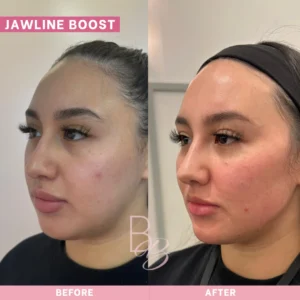
The goal of an Eye Boost is a rested, refreshed look, not a dramatic change. A successful result usually means softer shadows, a smoother transition from lid to cheek, and less need for concealer, while the eyes still look like your own. Results are typically visible right away and continue to refine as swelling resolves. You can review examples on our under-eye filler before and after page, keeping in mind that each patient’s anatomy, skin, and response are different. Longevity varies by product, anatomy, and metabolism, and we plan maintenance individually.
Medical Oversight and Experience in the Eye Area
The eye area benefits from deep anatomical knowledge, and our team brings a strong clinical foundation to every treatment. Anisa Mudawar began her career in critical care and later worked as a nurse practitioner at UCI Plastic Surgery, where she assisted in facelifts and developed a detailed understanding of facial anatomy. Our practice is supervised by Steve Yoelin, MD, a board-certified ophthalmologist with more than two decades of experience in minimally invasive medical aesthetics.
You can learn more about our clinical team and the training behind our care. Beauty Boost Med Spa has also been recognized among Allergan’s Top 50 Med Spas in the U.S., and our founder has been named among the Top 100 Aesthetic Injectors in America. These distinctions matter to us less as accolades and more as a reflection of the standard of safety and natural-looking results we hold ourselves to with every patient.
Schedule Your Eye Boost Consultation in Newport Beach
If tired-looking eyes or under-eye hollows have been on your mind, a consultation is the most reliable way to understand what is causing them and which approach may help. During your visit, our team will assess the eye area in context with the rest of your face, review any previous treatments, and explain whether an Eye Boost, an Ultimate Eye Boost, a Reset Boost, or a different treatment is most appropriate. If filler is not the right answer for you, we will tell you.
Our office is located at 20072 SW Birch St, Suite 230, in Newport Beach, and we welcome patients from across OC. We invite you to contact Beauty Boost Med Spa to schedule your consultation with Anisa Mudawar and our team.
Before & Afters