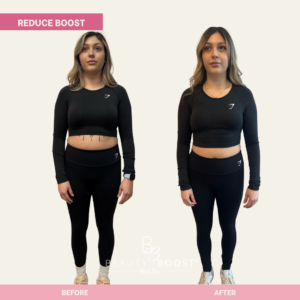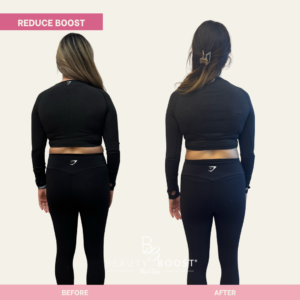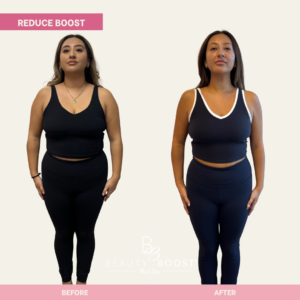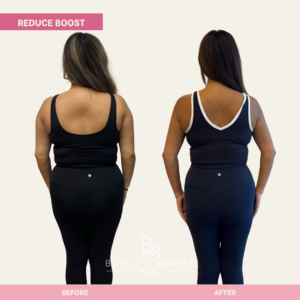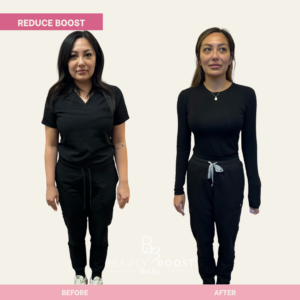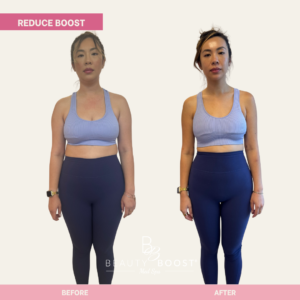

Weight management is one of the most personal aspects of health, and it is also one of the most misunderstood. Many patients arrive at a consultation carrying years of dieting history, a sense of frustration, and the quiet belief that their previous results did not last because of a lack of willpower. In clinical practice, the pattern is usually different: generic programs are applied to individual bodies, and the body responds by defending its previous weight.
At Beauty Boost Med Spa in Newport Beach, we approach medical weight loss as a supervised medical process rather than a short-term diet, with the goal of results that a patient can realistically maintain.
What Medical Weight Loss Actually Means
Medical weight loss is a clinically supervised approach to reducing excess body weight and improving metabolic health. It combines a health history and laboratory assessment, nutrition and activity guidance, behavioral support, and, when appropriate, prescription medication. The distinguishing feature is oversight: a qualified clinician evaluates candidacy, monitors progress, and adjusts the plan as the body adapts. At Beauty Boost Med Spa, this service is offered as Reduce Boost, our medical weight loss program.
The program is led by our clinical team under founder Anisa Mudawar, DNP, FNP-C, with supervising physician Steve Yoelin, MD. Anisa Mudawar is a nationally recognized aesthetic clinician and an Allergan Medical Institute Trainer, and the practice has been named among Allergan’s Top 50 Med Spas in the United States. That background matters here for a specific reason: a practice built on restraint and natural-looking outcomes tends to apply the same philosophy to body composition, favoring gradual, controlled change over rapid loss.
Why the Term Personalized Is More Than Marketing Language
Personalization in a medical weight loss setting has a concrete definition. It means the starting dose, the pace of escalation, the nutrition targets, and the follow-up interval are chosen based on your labs, your medical history, your medication list, your prior treatment responses, and your daily life. Two patients with the same starting weight may receive noticeably different plans. Personalization also means the plan changes over time, because metabolic adaptation, appetite signals, and life circumstances are not static.
Common Concerns Patients Bring In
Patients who seek medical weight loss in Orange County usually describe one of several patterns. Some have lost weight repeatedly and regained it. Some have a stable weight but rising blood pressure, worsening lipids, or elevated fasting glucose. Others describe fatigue, joint discomfort, disrupted sleep, or a change in body composition that began during perimenopause or after a pregnancy. These are legitimate clinical indications, and they deserve evaluation rather than another round of self-directed dieting.
Concerns about medication are equally common and entirely reasonable. Patients ask whether they will be dependent on a prescription indefinitely, whether gastrointestinal side effects are tolerable, whether muscle mass will be lost along with fat, and whether weight will return if treatment stops. We address these questions directly at consultation. The evidence is clear that weight regain is common after discontinuation of GLP-1 receptor agonist therapy without a maintenance plan. Wilding and colleagues, reporting the STEP 1 trial extension in Diabetes, Obesity and Metabolism in 2022, found that participants regained a substantial share of lost weight in the year after treatment withdrawal. That finding is not a reason to avoid treatment. It is a reason to plan for the maintenance phase from the first visit.
Respecting Individual and Cultural Context
Body composition, dietary patterns, and metabolic risk thresholds vary across populations, and food is deeply tied to family and cultural identity. A plan that asks a patient to abandon the meals that anchor their household is unlikely to last. In Orange County’s diverse communities, the more durable approach is to adapt portion structure, protein distribution, and meal timing within a patient’s existing food culture rather than replacing it. Our clinical team builds nutrition guidance around what a patient genuinely eats.
The Signature Reduce Boost Approach
A personalized program begins with assessment. That typically includes a review of weight history, medications, thyroid and metabolic labs, and any prior treatments, along with a discussion of sleep, stress, alcohol intake, and activity. From there, the clinician and patient agree on a target pace of loss and a set of measures that matter beyond the scale, such as waist circumference, energy, mobility, and lab trends.
Medication Selected to Fit the Patient
Where medication is appropriate, GLP-1-based therapies are the most widely studied option. Wilding and colleagues, publishing in the New England Journal of Medicine in 2021, reported that once-weekly semaglutide combined with lifestyle intervention produced significantly greater weight reduction than lifestyle intervention with placebo over 68 weeks. Jastreboff and colleagues, also in the New England Journal of Medicine in 2022, reported similar findings for tirzepatide in adults with obesity.
Candidacy, dosing, and titration pace are individual decisions made after evaluation, and not every patient is an appropriate candidate. Patients who are pregnant, planning pregnancy, or breastfeeding are not candidates for these medications. A personal or family history of medullary thyroid carcinoma or multiple endocrine neoplasia type 2, a history of pancreatitis, active eating disorders, or certain gastrointestinal conditions calls for an alternative approach or specialist referral, and some patients with specific medication interactions or unstable medical conditions are advised to coordinate with their primary physician first. Declining to treat is sometimes the most appropriate clinical decision, and we will say so directly.
Supporting Therapies Available at the Practice
We also offer peptide therapy for patients whose goals include recovery, energy, and healthy aging alongside weight management. Because Beauty Boost is primarily an aesthetics practice, patients often ask how body and facial changes interact. Meaningful weight reduction can reduce facial fat volume and make the mid-face look flatter, which is why some patients later discuss collagen-stimulating options such as Sculptra Collagen Boost or our Filler Boosts. These conversations are sequenced deliberately, usually after weight has stabilized, so that treatment decisions are based on a settled baseline.
Adjusting the Plan Over Time
Plateaus are expected, not exceptional. As weight decreases, energy requirements fall and appetite signaling shifts, so a plan that worked in month two may need revision in month five. Adjustment may involve dose changes, a protein and resistance-training emphasis to preserve lean mass, a change in follow-up frequency, or a deliberate maintenance phase rather than continued loss. This iterative adjustment is the single greatest practical difference between a supervised program and a self-directed diet.
What to Expect
Medical weight loss does not involve recovery in the surgical sense, but there is an adjustment period. Patients starting GLP-1 therapy commonly report nausea, early fullness, constipation, or reflux during dose escalation. These effects are usually mild to moderate and improve with slower titration, adequate hydration, and smaller, protein-forward meals. Reporting any persistent or severe symptom promptly allows the plan to be modified before it becomes a reason to stop treatment.
Outcomes are best described as gradual and variable. Published trial averages describe groups, not individuals, and a patient’s own trajectory depends on adherence, baseline metabolic health, sleep, medication interactions, and life circumstances. A steady, sustainable pace of reduction is generally preferred over rapid loss, because slower change is more compatible with preserving lean muscle mass and with the behavioral learning that supports maintenance. We monitor progress using several markers rather than the scale alone.
Patients whose primary goal is a rapid change before a specific date are usually counseled toward a different expectation. Sustainable results follow a slower timeline, and programs designed for speed tend to produce the regain pattern patients are trying to escape. Similarly, patients whose concern is localized contour rather than overall metabolic health may be better served by a discussion of body and skin treatments than by a weight loss protocol.
What Maintenance Looks Like
Maintenance is a defined phase of the program, not an afterthought. It may involve a reduced medication dose, a structured nutrition framework, continued strength training, and less frequent but ongoing clinical check-ins. Patients who plan for maintenance from the beginning tend to navigate the transition more comfortably than those who treat the end of active treatment as the end of care. We discuss this phase at the initial consultation so that expectations are set early.
Schedule a Consultation in Newport Beach
A personalized medical weight loss journey is more sustainable because it is built on assessment rather than assumption, adjusted rather than fixed, and planned through maintenance rather than stopping at a number. If you would like to understand your own options, our clinical team, led by Anisa Mudawar, DNP, FNP-C, with supervising physician Steve Yoelin, MD, offers private consultations at our Newport Beach office. You are welcome to review our full range of services, read more about Beauty Boost Med Spa, or contact the office to arrange a time. A consultation is a conversation, not a commitment, and it is the appropriate first step toward a plan designed for your body and your life.
Before & Afters