
Deciding to explore injectables is rarely impulsive. For most patients, it follows months or even years of noticing small changes in the mirror, reading conflicting advice online, and wondering whether treatment could help without making them look like someone else. Injectable treatments are now among the most requested aesthetic procedures in Newport Beach and throughout OC, and that popularity has made them feel routine. Yet injectables are medical treatments that involve prescription products, detailed facial anatomy, and real, if uncommon, risks. Patients who understand the landscape before they book tend to ask better questions, choose their provider more carefully, and feel more comfortable with the results.
At Beauty Boost Med Spa, many of our first visits begin with a patient saying some version of the same thing: “I am not sure what I need, I just want to look like myself on a good day.” That is a reasonable starting point, and it is exactly where a thoughtful consultation should begin. Our founder, Anisa Mudawar, DNP, FNP-C, established our practice in 2018 with a focus on patient education, safety, and natural-looking outcomes, and those priorities guide how we introduce new patients to injectable care.
Understanding Injectable Facial Rejuvenation
Injectable facial rejuvenation refers to a group of non-surgical treatments delivered through fine needles or cannulas to soften signs of aging, restore lost support, or improve skin quality. The term covers several distinct categories of products, and each works in a different way. Understanding those differences is the single most useful thing a new patient can learn, because it explains why one treatment may help a concern while another will not.
Neuromodulators
Neuromodulators such as Botox temporarily relax specific muscles that create dynamic lines, the creases that appear with expression. They are most commonly used in the forehead, the frown lines between the brows, and the crow’s feet around the eyes. Neuromodulators do not add volume, so they are not designed to address hollowing or sagging. Results typically develop over several days to two weeks and gradually soften over a period of months. Patients can learn more on our Botox page.
Hyaluronic Acid Fillers
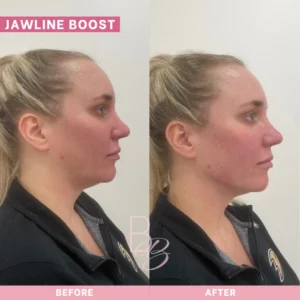
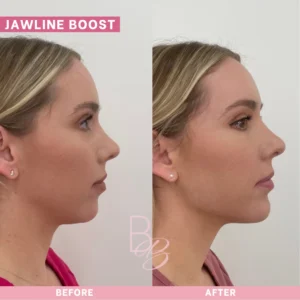
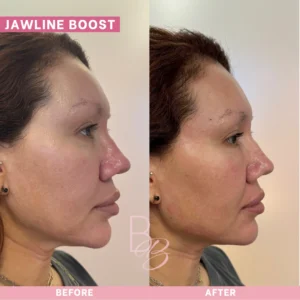
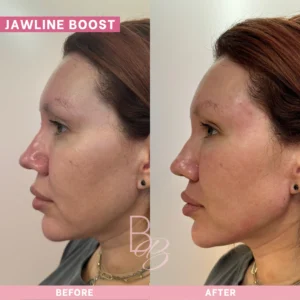
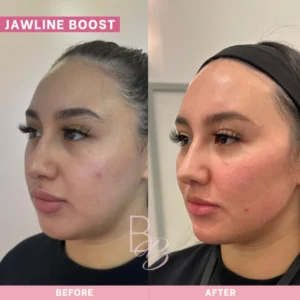
Dermal fillers made from hyaluronic acid are gels that restore volume, add structure, or refine contour. At Beauty Boost, these treatments are organized as Filler Boosts, each named for the area it addresses, such as the Cheek Boost, Temple Boost, Eye Boost, Chin Boost, Jawline Boost, Lip Boost, and Nose Boost. A systematic review by de Castro Costa and colleagues in Aesthetic Plastic Surgery (2026), which analyzed 24 studies and more than 1,400 patients, found that hyaluronic acid filler often persisted in measurable amounts at 12 and 24 months, with patient satisfaction declining gradually alongside filler volume. The review also found that long-term adverse events were rare. An important feature of hyaluronic acid filler is that it can be dissolved with an enzyme called hyaluronidase if adjustment is ever needed.
Collagen Stimulators and Skin Quality Treatments
Some injectables are designed to encourage the body’s own collagen production rather than to add immediate volume. Our Sculptra Collagen Boost and Radiesse Collagen Boost fall into this category, and results tend to build gradually over weeks to months. Skin quality treatments such as SkinVive and our Skin Boost focus on hydration, texture, and fine lines rather than on contour. Patients interested in gradual, structural improvement can read about our Sculptra Collagen Boost, and those focused on skin smoothness and glow can explore SkinVive.
Common Questions and Concerns Before Starting
New patients tend to arrive with a similar set of concerns, and each deserves a direct, honest answer. Some worry about pain. Others worry about looking frozen, overfilled, or noticeably different at work or with family. Many simply want to know whether their concern is one that injectables can realistically improve, or whether another approach, such as skin tightening or a referral for a surgical opinion, would serve them better.
Will I Still Look Like Myself?
This is the concern we hear most often, and it is a valid one. Facial aging is not a single change but a layered process. A review by Swift, Liew, and Weinkle in Aesthetic Surgery Journal (2021) describes how aging involves bone, ligaments, fat compartments, muscle, and skin, each changing at its own pace. When treatment respects those layers, and when an injector supports structure rather than simply filling lines, results are more likely to look natural. When treatment chases every crease individually, the face can begin to look heavy. Choosing a provider who explains this reasoning is one of the best protections against an unnatural result.
Is This Safe?
Injectables have a well-established safety profile when administered by trained medical professionals, but no medical procedure is risk-free. Common side effects include temporary swelling, tenderness, and bruising. Rare but serious complications can occur with filler, most notably vascular occlusion, in which product blocks or compresses a blood vessel. A 2024 review by Doyon and colleagues in Aesthetic Surgery Journal, analyzing published cases of vision loss after filler injection, identified the nose, forehead, and glabella as the highest-risk sites, and concluded that practitioners who inject filler should have a thorough knowledge of prevention and management strategies. This is not a reason for fear, but it is a strong reason to be selective about who treats you.
Respecting Individual Goals and Identity
Every patient brings a unique set of features, cultural background, and personal preferences. Some patients want to soften signs of fatigue, others want to preserve features that are meaningful to their heritage, and others are simply curious about what is possible. We believe the role of the injector is to understand those goals, not to impose a single aesthetic ideal.
How We Customize Injectable Care
At Beauty Boost, our team of expert injectors follows our Signature Boost approach, a consultation-first process built on anatomy, safety, and restraint. We begin by listening to what bothers you, then evaluate your face at rest, in motion, and in profile. Rather than recommending products, we identify which layers of the face are contributing to your concern and which Boost, or combination of Boosts, may address it. Anisa Mudawar also chose to price treatment per area rather than per syringe, which keeps the focus on appropriate correction instead of on product volume.
Ultrasound Imaging for Safety and Planning
A distinguishing feature of our practice is the use of ultrasound imaging as a diagnostic and planning tool. High-frequency ultrasound allows our clinicians to visualize blood vessels, tissue planes, and previously placed filler. We use it for vascular mapping in higher-risk areas such as the nose, temples, and tear troughs, and to locate old filler before dissolving or retreating. For patients who have had injectables elsewhere and are unsure what remains, this can be especially reassuring.
Combining Treatments Thoughtfully
Because aging affects several layers at once, many patients benefit from a combination of approaches over time rather than a single large session. A patient with expression lines and mild mid-face volume loss might begin with Botox and a Cheek Boost. Another patient with hollow temples and dull skin might pair a Temple Boost with SkinVive. For patients whose concerns span several areas, The Facial Balance Boost combines five targeted treatments into one personalized plan. We generally favor a staged approach that lets each treatment settle before the next is considered.
Candidacy and Reasons to Wait
Injectables are generally appropriate for healthy adults with realistic expectations. We may recommend postponing treatment during pregnancy or breastfeeding, during an active skin infection or cold sore outbreak near the treatment area, or when a patient has a known allergy to a product component. Patients with autoimmune conditions, bleeding disorders, a history of complications from prior injectables, or certain neuromuscular conditions should discuss their history in detail so we can decide together whether treatment is advisable. We also recommend sharing all medications and supplements, since some can increase the likelihood of bruising.
What to Expect
Your first appointment begins with a detailed consultation and medical history. When appropriate, ultrasound imaging is performed before treatment, a process that typically takes 30 to 60 minutes depending on the area and complexity. Topical numbing may be used, and many fillers contain lidocaine for added comfort. Treatment itself is usually brief, and most patients return to their normal routine the same day.
Recovery
Mild swelling, redness, tenderness, or bruising at injection sites is common and usually subsides within 24 to 72 hours. We generally suggest avoiding strenuous exercise, heat exposure, and alcohol for a short period after treatment, and we provide written aftercare instructions for every visit. Neuromodulator results develop gradually, while filler results are visible immediately and continue to settle over the following days.
Planning Around Events
If you have a wedding, reunion, or important photograph on your calendar, we recommend scheduling injectables at least two to four weeks in advance. This allows time for bruising to resolve, for neuromodulators to reach their full effect, and for any small refinement to be made. First-time patients in particular benefit from this buffer, since it removes pressure from the process.
Realistic Outcomes and Maintenance
Injectables can soften, support, and refresh, but they do not stop the aging process or replicate the results of surgery. Maintenance intervals vary by product and individual. Neuromodulators are commonly repeated every few months, while filler and collagen-stimulating treatments tend to last longer. We encourage patients to view injectables as an ongoing, adjustable plan rather than a one-time event.
Choosing the Right Injector in OC
The provider you choose matters as much as the product. Before booking, we encourage patients to ask about the injector’s medical credentials, training in facial anatomy, experience with complication management, and access to hyaluronidase. It is also reasonable to ask how the practice evaluates previously placed filler and whether imaging is available.
Anisa Mudawar earned her Doctor of Nursing Practice in 2015 and began her career in critical care before working as a nurse practitioner at UCI Plastic Surgery, where she assisted in facelifts and reconstructive procedures. She is an Allergan Medical Institute Trainer who teaches advanced injection techniques to medical professionals nationwide, and she mentors injectors through the Beauty Boost Aesthetic Academy. Patients can read more on Anisa’s profile page.
Begin With a Consultation at Beauty Boost Med Spa
Exploring injectables should feel informed and unhurried. At Beauty Boost Med Spa, Anisa Mudawar and our team of expert injectors will take the time to understand your goals, review your medical history, use ultrasound imaging when appropriate, and explain which Boosts, if any, may suit you. Some patients leave their first visit with a treatment plan, others leave with a clearer understanding and a decision to wait, and both are welcome outcomes. We are glad to care for patients from Newport Beach and throughout OC. When you are ready, please contact our Newport Beach office to schedule your consultation.
Before & Afters